
Usage Rights: All content is available for editorial use with attribution to Orlando Health

ORLANDO, FL — Heart failure doesn’t wait for old age. It’s on the rise among young adults because underlying symptoms can be difficult to detect and are often ignored.
A new survey from Orlando Health reveals only about one in ten (9%) Americans would schedule an appointment with a cardiologist as soon as possible if they were to experience classic heart failure symptoms, such as unusual fatigue, shortness of breath, unexplained weight gain, bloating, or an irregular heartbeat. Meanwhile, half of Americans would not even call their primary care doctor to schedule a new, non-urgent appointment.
“When it’s a young patient, it’s usually dismissed. It is not standard to think that somebody that young is going to be sick,” said Yahaira Ortiz, M.D., cardiologist at the Orlando Health Heart and Vascular Institute. “If you’re going to a provider that’s not recognizing persisting symptoms, you should seek further medical attention.”
Dr. Ortiz said many of her patients miss the significance of their early symptoms. Some do not realize that they have an irregular heartbeat, or arrhythmia, and instead brush it off as feeling jittery or anxious. Others chalk the fatigue, shortness of breath, weight gain and bloating to a virus instead. She said her patients are shocked when the diagnosis turns out to be heart failure.
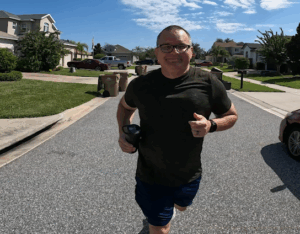
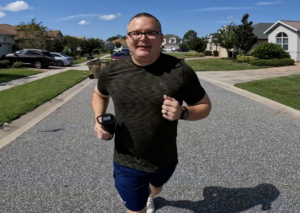
“I thought that’s something that comes with old age,” said Alex Balmes, a 32-year-old father from Orlando, FL. “I always just said, ‘That’s anxiety. I don’t need to go to a doctor.’”
Balmes experienced all of the underlying symptoms, and his organs began to fail. Dr. Ortiz recommended a Left Ventricular Assist Device (LVAD) implant, a surgical procedure where a doctor implants a battery-powered pump in the patient’s chest to help move blood through the body.
“You don’t realize how sick you are until you get healthy,” Balmes said. “Now, I’m back to playing regularly with my daughter. She forgets that I have batteries. I’ve just got to slow it down a little bit. I try to say, at least for me so young, I just got older faster.”
Patients typically recover from an LVAD implant within three months. It’s usually used as a temporary measure while the heart repairs itself or the patient waits for a transplant, like in Balmes’ case.
Dr. Ortiz said there are a variety of risk factors for heart failure among young adults, including obesity, high blood pressure, diabetes, chronic kidney disease, the regular use of alcohol, as well as genetic and environmental factors.